
News & Insights | June 11, 2024
Managed EDR: Your Shield Against Cyber Threats
Antivirus catches yesterday's malware. Managed EDR watches every device for the attack in progress and shuts it down, with a real security team behind it. Here is what that means for an architecture or engineering firm.
By Resolved Team
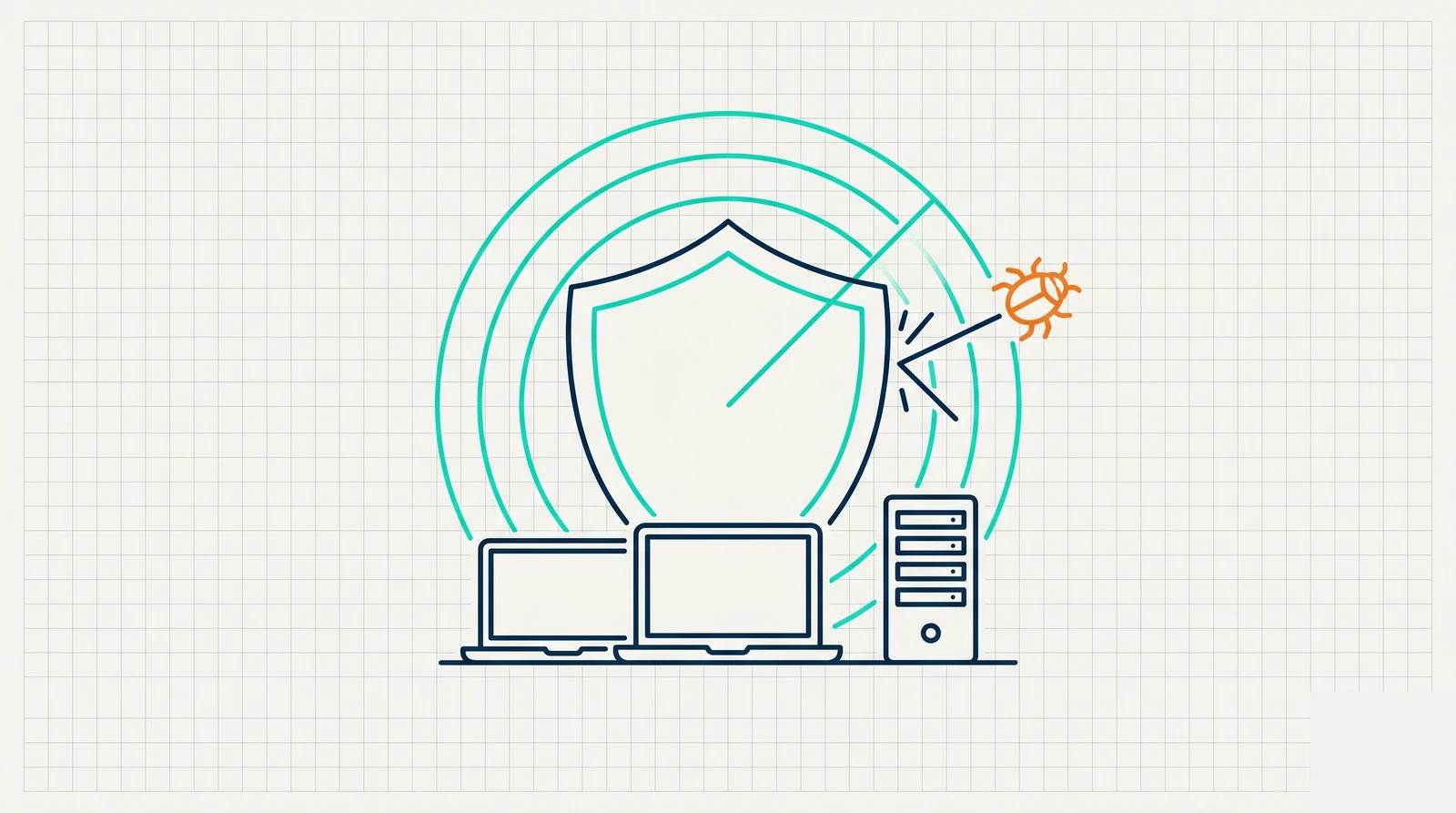
Picture the Monday a project lead opens their laptop and every Revit file on the server is encrypted, with a ransom note where the floor plans used to be. For an architecture or engineering firm, that is not just an IT problem. It is missed deadlines, a stalled project, exposed client data, and a very hard phone call. The technology that prevents that morning is not the antivirus you installed years ago. It is Managed EDR.
What EDR actually does
EDR stands for Endpoint Detection and Response. An endpoint is any device your team works on: laptops, workstations, servers, phones. Traditional antivirus works from a list of known-bad files, so it only catches threats someone has already catalogued. EDR works differently. It watches how every device behaves and flags the actions an attack takes, even when the malware itself is brand new: a process quietly encrypting files, a login from an unusual place, a tool trying to spread across the network.
That shift matters, because the threats that actually hurt firms today are the ones no list has seen yet.
Why the “Managed” part is the point
A detection tool is only as good as the person watching it. Most firms do not have a security analyst on staff at 2 a.m. when an attack starts, and an alert nobody reads is not protection.
Managed EDR puts a security team behind the tool. They watch the alerts around the clock, separate real threats from noise, and respond in minutes: isolating the affected device before the problem spreads, then investigating how it got in so it cannot happen again. You get the capability of an in-house security operations team without hiring one, which, for a firm of 20 or 200, is the only practical way to have it at all.
What it protects, in your terms
For an AEC firm, the stakes are specific:
- Project continuity. Ransomware that locks your active models can stop billable work cold. Catching it early is the difference between an inconvenience and a shutdown.
- Design IP and client data. Your drawings, specifications, and client information are valuable to attackers and protected by your obligations. EDR limits how far an intruder gets.
- Your reputation and insurability. Clients and insurers increasingly ask how you protect their data. “We have a security team monitoring every device” is a far better answer than silence.
Where it fits
Managed EDR is one layer, not the whole answer. It works alongside the basics that catch the rest: phishing-aware staff, sensible access policies, and backups you have actually tested. Real security is those layers working together, with someone accountable for the whole picture.
That is how we approach it at Resolved. EDR is part of the security foundation we manage for architecture and engineering firms, tuned to how your team works and tied back to the wider strategy rather than sold as a standalone box. If you are not certain what is watching your endpoints today, that is worth finding out before an attacker does.
News & Insights
All insights